& Campaigns
I have read the privacy notice and consent to the processing of my email address for newsletter subscription purposes in accordance with the Personal Data Protection Law No. 6698, and I agree to receive emails.
Explore the highlights of Edremit, one of Balıkesir’s most sought-after destinations, renowned for its crystal-clear waters, beautiful beaches, thermal springs, and rich natural and historical attractions. Find out more in our Edremit travel guide.
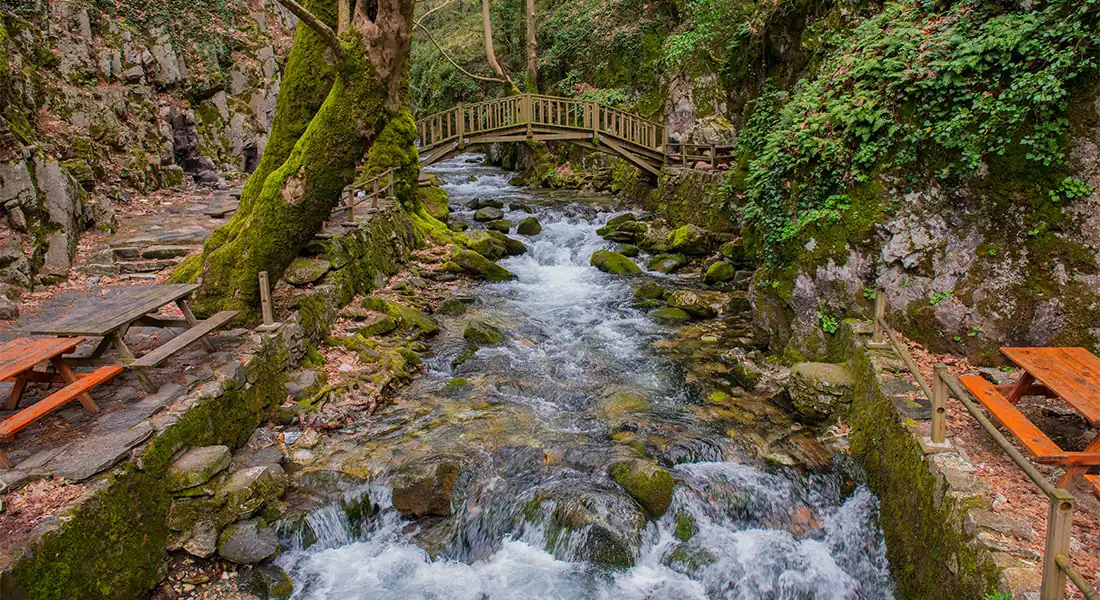
Kazdağı National Park is located on the shores of the beautiful Edremit Gulf, one of our country’s leading tourism regions. Around the National Park, the settlement areas of Thebe, Killa, Khrysa, Anderia, Antandros, Pedosos, and Astrya are known. In the nearby area, there are three important ancient cities: Adramyttion, founded before the Trojan Wars and located 6 km from Edremit; Antandros, established on top of Kaletaşı Hill on the southern side of the mountain; and Assos, situated within the borders of Çanakkale province. The aspect of Kazdağı that foreigners find most fascinating is the mythological legend of Mount Ida.

Although it is called an ethnography museum, thanks to a donation it also houses the world’s largest sea turtle (360 kg, 197 cm). This turtle, which lost its way and appeared in an unexpected place, is different from the familiar Caretta caretta species; its back is entirely covered with skin, and since it could not breathe on land, it died by drowning. If you are taking a North Aegean tour, this museum is an absolute must‑see.
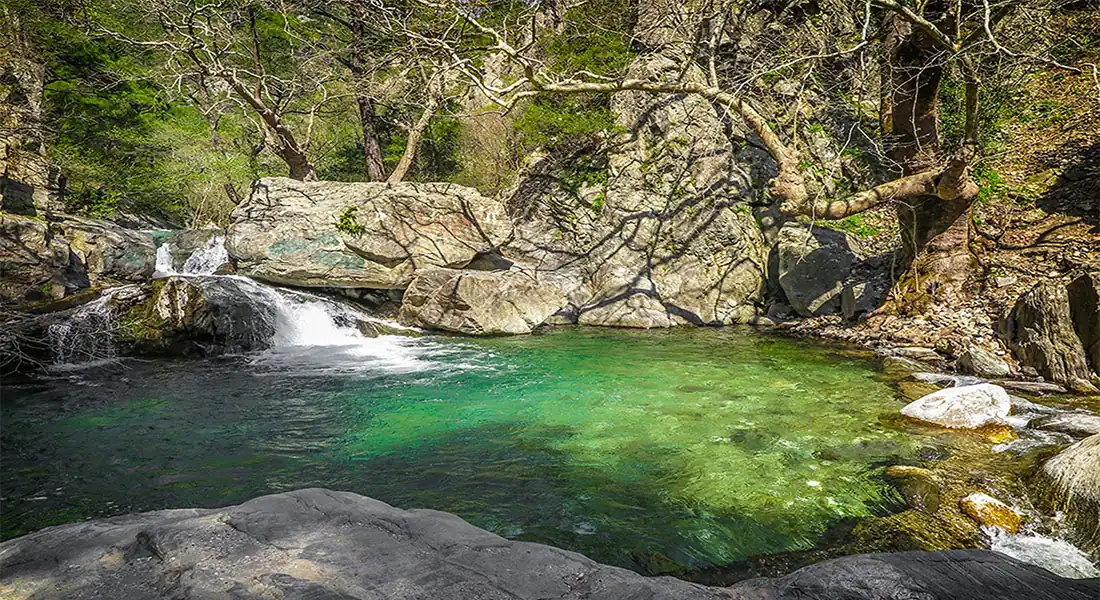
This scenic spot is closely linked to a well-known Anatolian legend, later retold by the celebrated writer Sabahattin Ali. According to the story, Hasan attempted to prove his strength by carrying a heavy sack up the Kaz Mountains, but tragically lost his life in the water when he could go no farther.
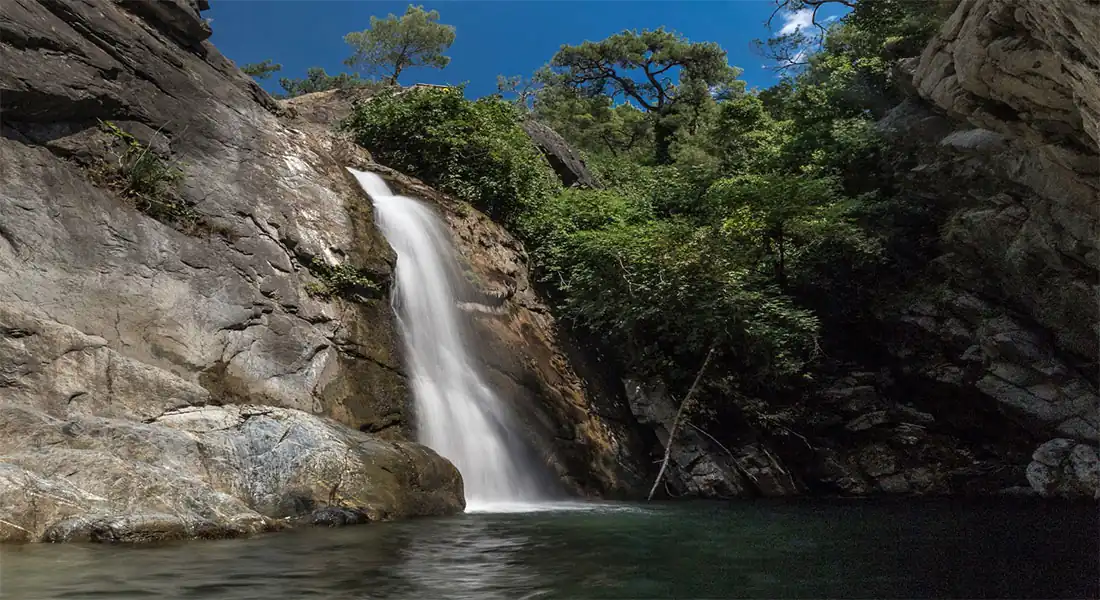
Located in Zeytinli on the seaward slopes of the Kaz Mountains, Sütüven Waterfall is one of the region’s most beautiful natural attractions. Flowing through a protected valley covered with pine forests, it offers a peaceful atmosphere where the scenery becomes even more striking as the sound of rushing water fills the air.
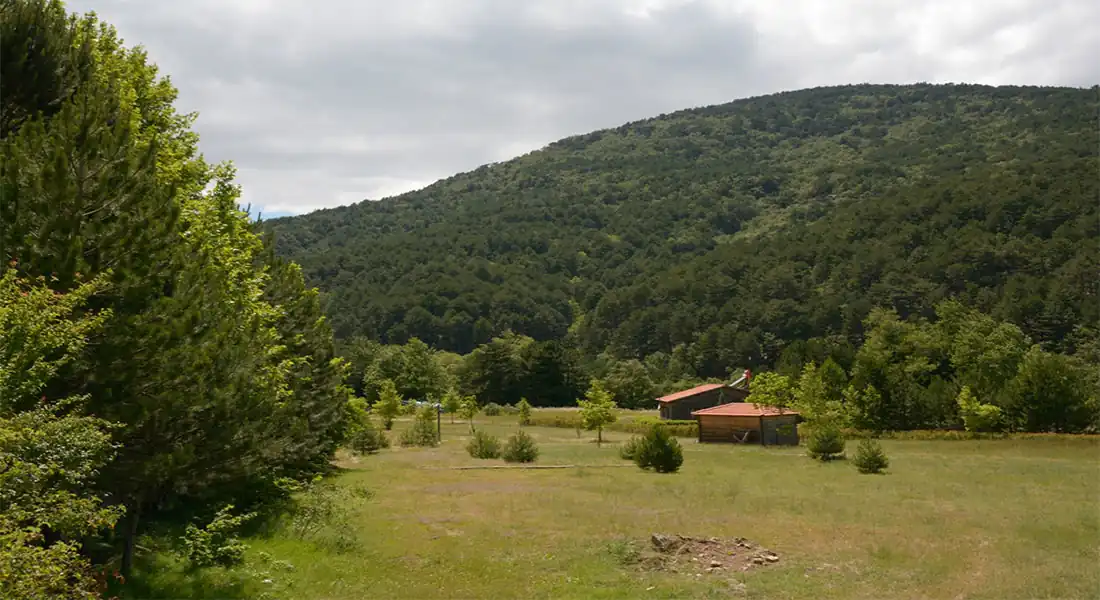
If you enjoy fresh air, natural spring waters, forest walks, and natural pools, this nature park is well worth a visit. Darıdere Nature Park covers a wide area and offers facilities such as camping spaces, caravan areas, a restaurant, hobby gardens, a football field, riverside seating areas, and accommodation options.
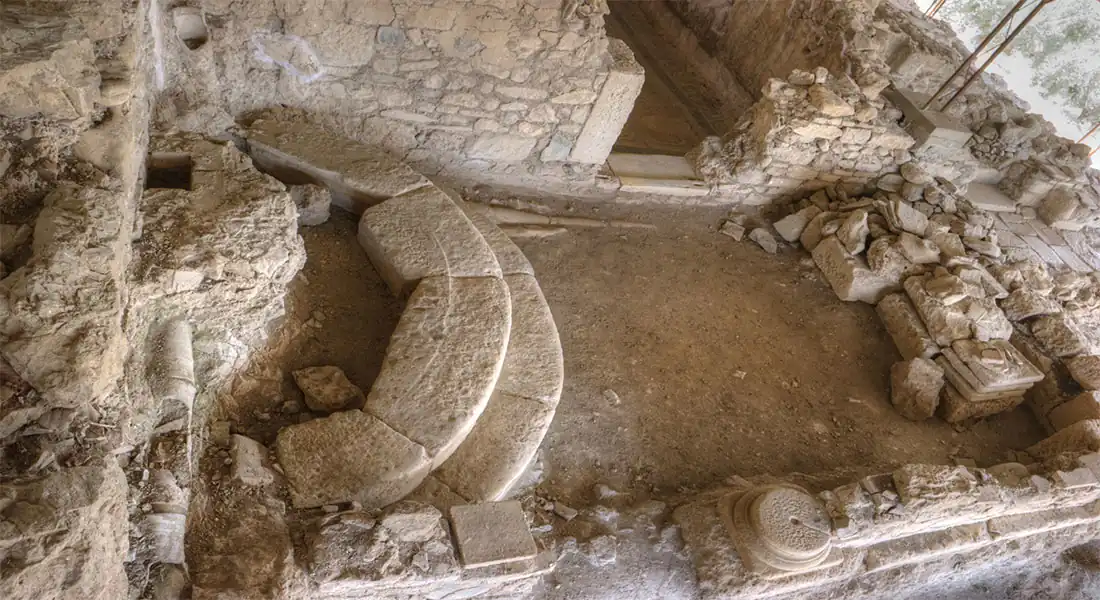
The ancient city of Antandros is an important Troas settlement located just 2 km from Altınoluk in Edremit. Positioned strategically on the route between Mysia and Troas, its origins are believed by some ancient writers to date back to before the Trojan War. Academic excavations, which began with surface surveys in 2000, continue to reveal the site’s historical importance.
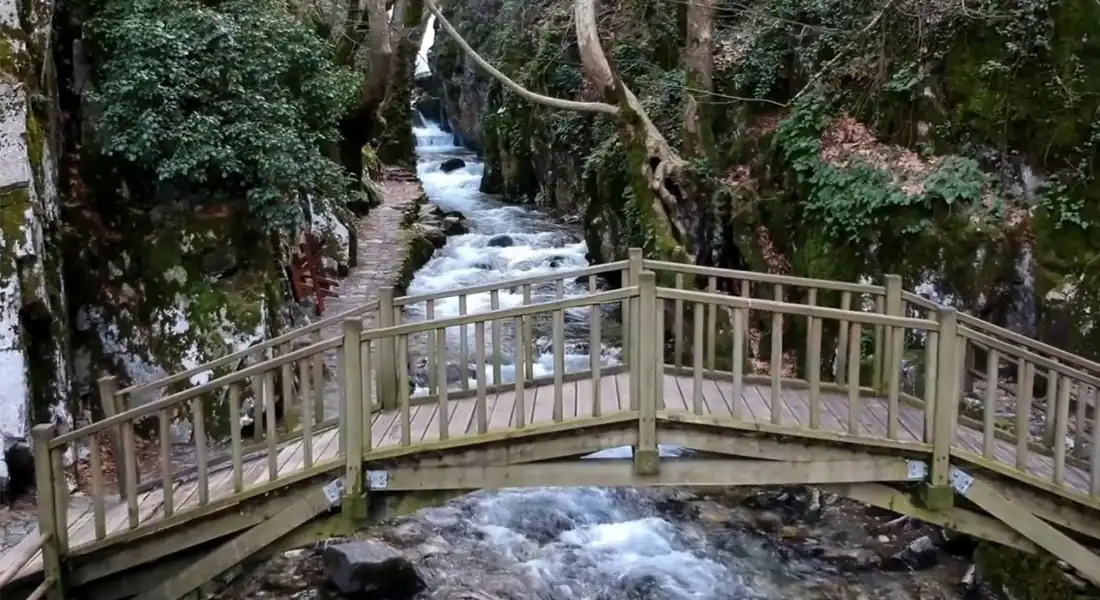
Located in the Bayramiç district of Çanakkale, Ayazma Recreation Area lies in the northwestern part of the Kaz Mountains region. To reach the area from Bayramiç, visitors follow the 6 km road through Evciler. It is a popular stop for nature lovers exploring the region.
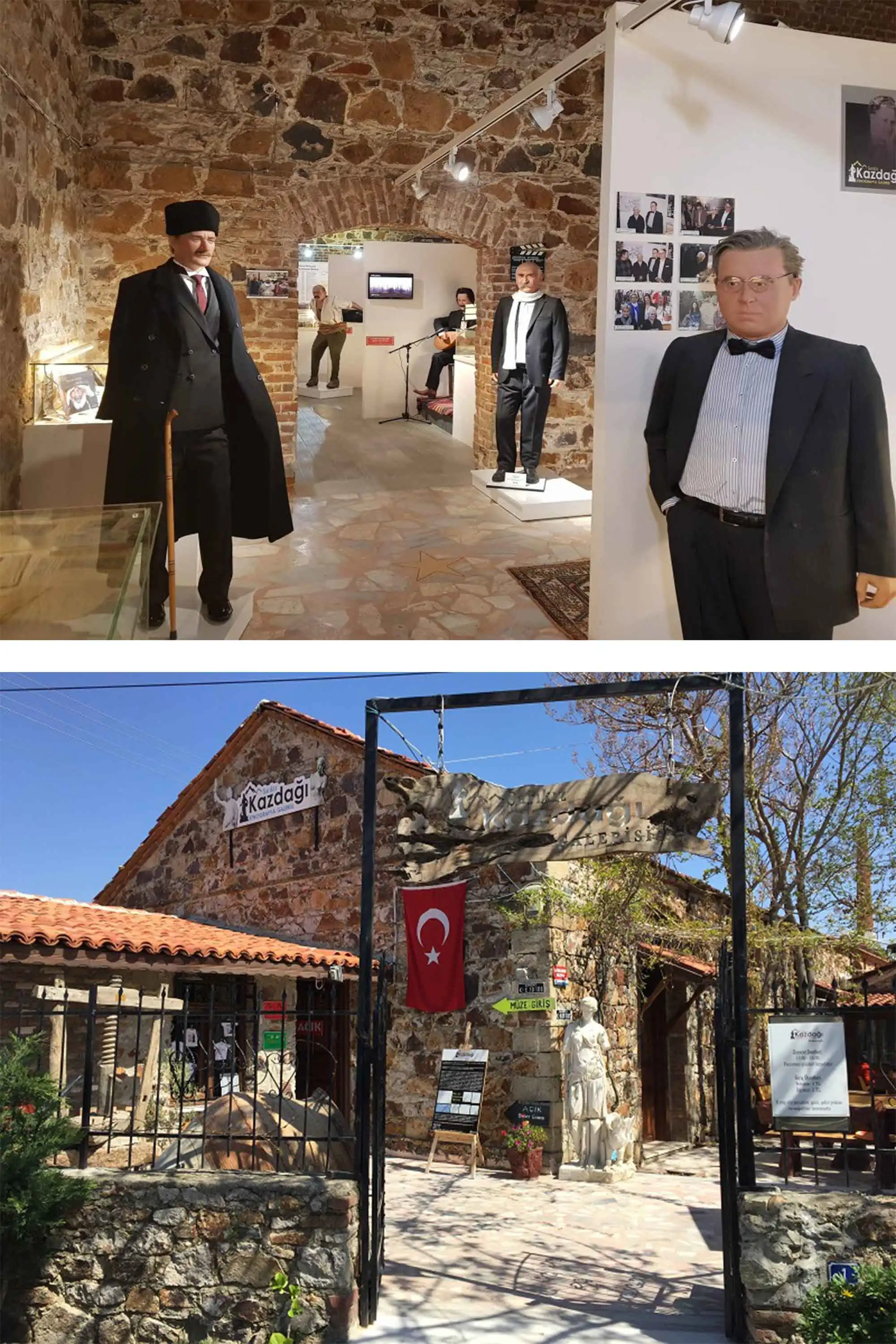
Covering 300 square meters of indoor space, the Gallery features two exhibition halls, a souvenir shop, a cafeteria, and a 50‑seat conference hall. Visitors can enjoy:
Dedicated to notable figures connected to Kazdağı:
All exhibits are enriched with photographs, documents, ephemera, ancient artifacts, sculptures, models, videos, and wax statues — making the Gallery a cultural highlight for anyone exploring the North Aegean.
Visitors may leave large belongings such as bags in the cloakroom. Secure safes are available in guest rooms and at reception for valuables. Responsibility for personal valuables remains with the visitor.
Backpacks, suitcases, large shopping bags, and umbrellas are not permitted in exhibition areas. These items may be left in the cloakroom.
Visitors may enter with strollers and baby pushchairs. Security staff can assist with entry and exit if needed.
Areas of the museum open to visitors are accessible for wheelchair users.
Pets are not allowed in the museum, with the exception of guide dogs.
Food and beverages are not permitted in museum exhibition halls.
Smoking, including the use of electronic cigarettes, is prohibited in both indoor and outdoor museum areas.
Children under the age of 12 may visit the museum only when accompanied by an adult.
Running, speaking loudly, laughing excessively, disturbing others, and littering are prohibited inside the museum.
Unless otherwise stated, touching exhibits or crossing security barriers is strictly prohibited. Exhibits are monitored by security systems.
Phone calls and flash photography are also prohibited.
Non-professional photography and video recording for personal memories are permitted, provided that no flash, tripod, or selfie stick is used. Any reproduction, publication, sale, or public use of such images beyond personal purposes requires prior written permission from the museum administration.
One of the most common issues at historical sites is the removal of objects by visitors. Even taking small fragments from structures of architectural value can cause irreversible damage.
Many sacred sites are also regarded as historical monuments. Removing stones, soil, or other materials from places of historical or spiritual significance, such as cemeteries, is strictly prohibited.
Littering is one of the most common problems in tourist areas, especially at archaeological and historical sites. Waste not only pollutes the environment but can also create serious fire risks and damage heritage areas.
Lighting fires is highly dangerous and is strictly prohibited in and around historical sites and protected areas.
Visitors are encouraged to document their trips respectfully. Climbing on monuments or engaging in behavior that may damage historical structures in order to take better photographs is prohibited.
Many historical artifacts in museums and archaeological sites are displayed in protected cases. Those that are displayed openly must not be touched, as contact may damage their surfaces and texture.
Writing or drawing on historical buildings, monuments, or artifacts is strictly prohibited and causes irreversible damage.
Visitors carrying bags should take care, especially in narrow or crowded areas, to avoid brushing against walls or displayed objects and causing accidental damage.
When visiting historical sites related to different cultures or beliefs, visitors are expected to behave respectfully and with sensitivity.
At religious sites of historical importance, visitors should dress respectfully and in accordance with local expectations. For example, modest clothing is required when visiting mosques and shrines.
These heritage sites have been preserved with great care. Every visitor has a responsibility to help protect them and pass them on to future generations in their full beauty.
Within protected areas, rare, endemic, endangered, or potentially endangered plant species must not be damaged in any way.
Such species may not be collected, uprooted, or cut, and the eggs and nests of wild animals must not be disturbed or removed.
Tours are not permitted in strictly protected areas reserved for endangered species or in places where entry is unsafe for security reasons.
No activity may be carried out during tours that could harm birds. Individuals must not be disturbed, nests and chicks must not be touched, and tissue or blood samples may not be taken for any reason. Birdwatching and image capture are not allowed during breeding seasons.
Professional photography and filming may not be carried out without the necessary permissions from the Ministry.
Travel agencies organizing hunting tours, photography and filming activities, or wildlife observation tours for foreign visitors in Türkiye must obtain a hunting tourism certificate from the Ministry.
Fees and permitted durations for tours, photography, and filming are determined and announced annually by the General Directorate.
Wild animals encountered during tours must not be frightened or pursued. If the route overlaps with the direction in which an animal is moving, visitors must wait an appropriate amount of time and continue carefully without approaching closely enough to disturb the animal.
The administration provides the necessary visitor warnings, and additional safety precautions must be taken by the organizers of the activity.
Visitors must take all rubbish they produce back with them.
Making noise or playing loud music during tours is prohibited.
No activity may be carried out that pollutes the area, harms flora, or disturbs fauna.
Lighting fires is prohibited in all protected areas.
Wildlife must not be harmed or disturbed.
No intervention may be made that causes or may cause the deterioration or alteration of protected areas, nor may any activity be carried out that leads to soil, water, or air pollution or similar environmental problems.
Where certified area guides are available in protected areas, visitors must visit the site together with such guides. Day-use areas and areas outside absolute protection zones may still be visited in accordance with the defined rules.
In strictly protected zones and areas designated as absolute conservation zones, natural resources must be left in their undisturbed natural state. Unauthorized use of such areas and unrestricted visitor movement are strictly prohibited.
Visitors may not leave designated areas and routes within protected areas. This is important both for the protection of natural resources and for visitor safety.
The conditions and level of use of such areas are determined by the administration, and their carrying capacity may not be exceeded.
Visitor management and visitor use in planned protected areas are implemented in accordance with approved plans, and these decisions may not be exceeded.
The way a tour route may be visited, whether by vehicle, on foot, or otherwise, is defined in long-term development and management plans. Vehicles not included in these plans may not be used. In areas without a management plan, only environmentally suitable vehicles approved by the administration may be used.
In protected areas, services and facilities related to conservation, management, research, visitor information, and guidance are planned and implemented so as to create the minimum possible negative impact.
No activity may be carried out in wetlands that would affect the water regime.
No non-native species may be introduced into wetlands for any purpose, and no species may be collected from wetlands.
These rules have been prepared in accordance with Circular No. 2007/1 of the General Directorate of Nature Conservation and National Parks. Those acting contrary to these provisions are subject to the penalties foreseen under Environmental Law No. 2872. Where prohibited acts under Forestry Law No. 6831 and Fisheries Law No. 1330 are committed in places governed by National Parks Law No. 2873, penalties are applied at double the normal rate. Full compliance with these rules is essential for sustainable wildlife and protected area management, visitor safety, and the preservation of protected areas for future generations.
& Campaigns
I have read the privacy notice and consent to the processing of my email address for newsletter subscription purposes in accordance with the Personal Data Protection Law No. 6698, and I agree to receive emails.